Table of Contents
It’s very rare that I find myself struggling to figure out what to say about a piece of pop culture. But I guess that’s what happens when it’s representative of a moment in time you’ve been waiting for your whole life.
That moment? Seeing multiple, authentically cast, disabled stories onscreen. A moment that shouldn't have taken so long, but is finally, gloriously here.
A moment that must continue long after the credits roll.
Advertisement
Being Heumann, the new Apple TV film from Oscar-winning director Siân Heder, starring Ruth Madeley, Madeline Delp and Mark Ruffalo, chronicles the intricacies of an often-overlooked part of American history - the fight for disabled people to exist, visibly. It's a fight that still happens globally. And it's one I honestly can’t tell if the world is winning or losing, on any given day. But the fact this film exists? With twelve authentically cast disabled leads, many of whom were discovered in a worldwide talent search? And more than 50 disabled background actors too? That's a mammoth win we'll take.
I’m only twenty minutes in when the crying starts. Big shoulder-shaking sobs that make me grateful I’m watching this in private. It feels like too sacred of a moment to share with anyone else, anyway. I’ve never seen this many people who look and live like me, onscreen at once before. Wheelchair users. People with cerebral palsy. There are also Deaf and blind people. Some who use walking aides. Some who are short statured.
"It's revolutionary, but it shouldn't be," says Ruth Madeley, who has spina bifida, and stars as the 'mother' of the disability rights movement, Judy Heumann.
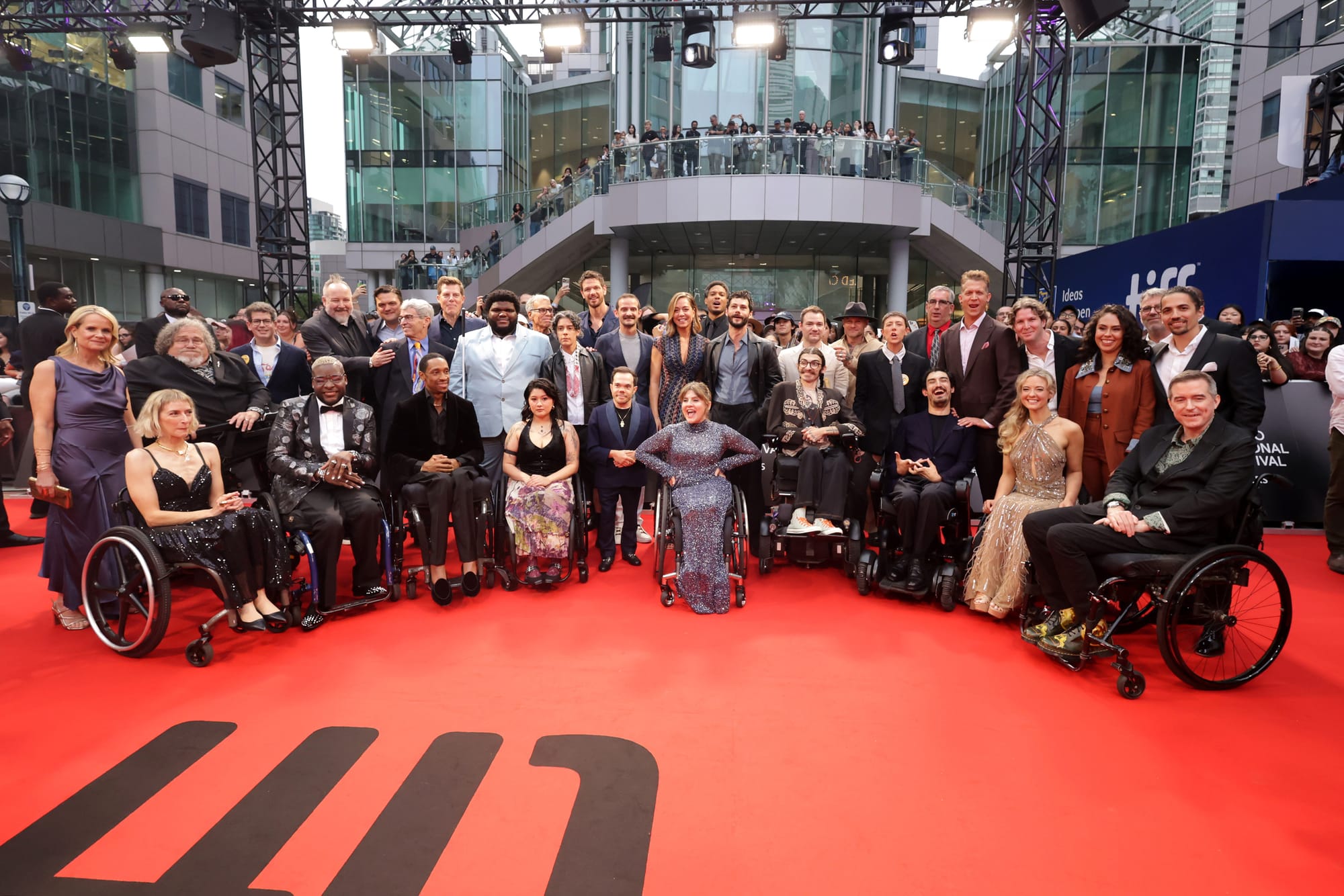
Allow me to set the scene. It’s the spring of 1977, in San Francisco, California. Judy and disability advocates across the country have been working tirelessly to hold the U.S. government accountable for their laws. It meant making changes to buildings, footpaths, public transport and more so disabled people could have access too. Basic tenets of a modern life that billions of people took (and still take) for granted every single day, because they don’t need to give it even a second’s thought.
There's a line in the film that sums it up perfectly: "They see you in front of the stairs, and they think that you're the problem. The stairs are the problem."
Advertisement
Obviously, making huge structural changes was never going to be a cheap exercise. Eventually, the government stopped taking Judy’s calls. I guess they thought if they ignored her, she’d simply go away. I mean, who doesn’t give up after three years of getting nowhere?
Well, Judy Heumann. The woman who fought the state of New York to earn her teacher’s licence, as a wheelchair user.
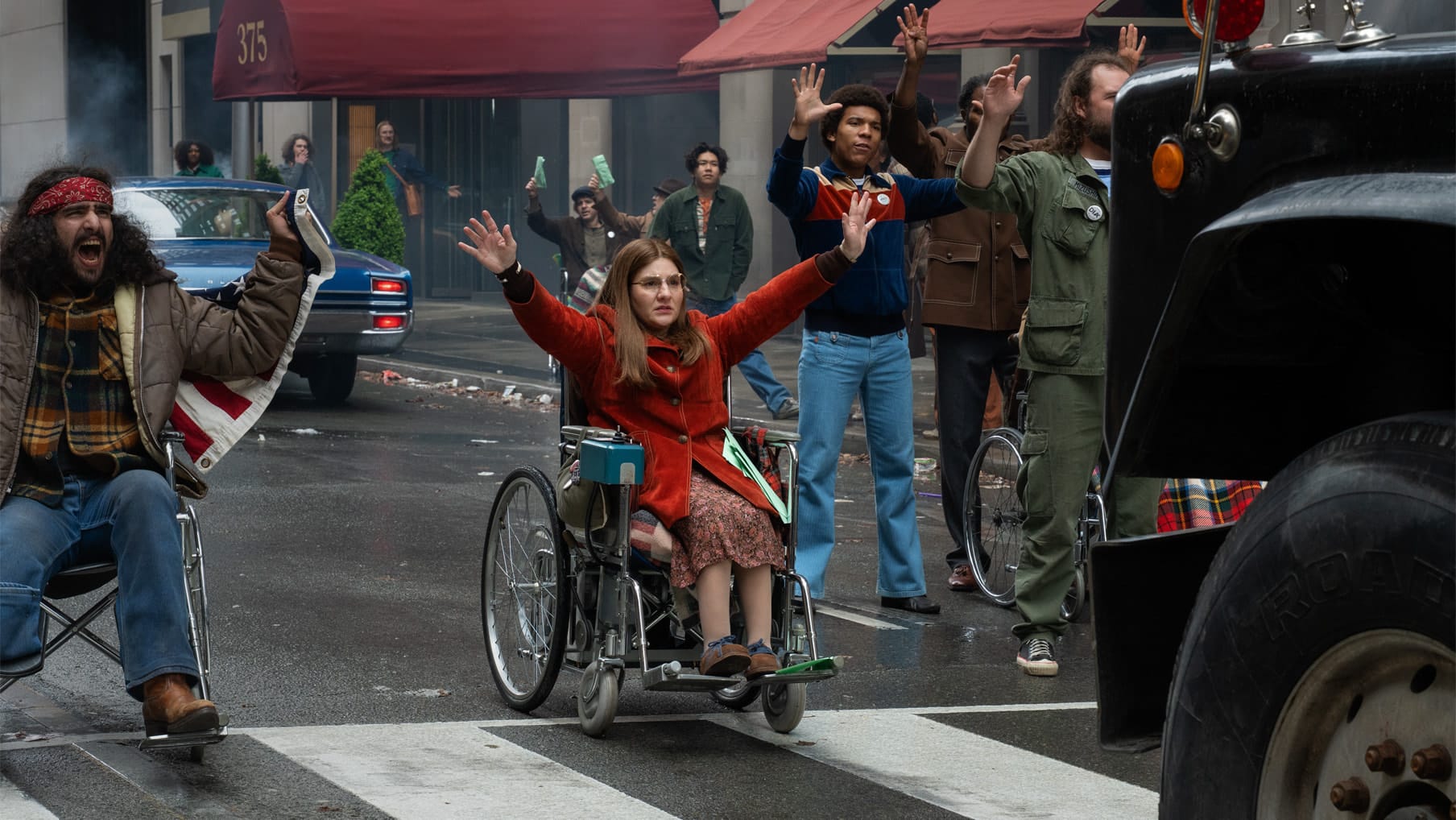
She was relentless and used her well-earned rage to convince a group of protestors and fellow advocates to join her in storming a federal building. One that had stairs, pretty much as soon as you got in the door.
Together, Judy and the "504 protestors" staged the longest sit-in in American history. Over 26 days, supported by organisations like The Black Panthers, they put their bodies on the line in what I can only describe as one of the most punk-rock efforts I have ever seen.
This film is, at its core, about change. Judy Heumann made it happen in the 70s. Now we're seeing it in Hollywood too.
When Siân Heder won the Best Picture Oscar for her film CODA, another landmark moment for Deaf and disabled representation onscreen, the world became her oyster. She could’ve made any film she liked, something easily packaged and made palatable. Something with less of a game-changing impact which only happens when people are comfortable breaking and remaking ‘industry rules’ together.
Instead, she chose this, the biggest of swings she could possibly take. Why? Well, because - “I was afraid that if I didn’t, a film like this wouldn’t get made.”
Advertisement
This was a project that demanded a complete and total transformation of the way filmmaking tackles accessibility and inclusion, across everything from making adjustments to accommodate for cast fatigue and pain to remodelling hair and makeup trailers so they were accessible. That’s some pretty fierce and fearless ally-ship if you ask me.
"There's lots of hard things we do in movies," Siân says. "We do massive stunts. We blow up buildings. We have car accidents and car chases. There's stunt teams that deal with that and figure it out. This is just something that nobody has put any energy into figuring out and so, if we were the first, and to do it at this scale, now other people can follow."
And it's not just about the cast, who are phenomenal, by the way. It's also about the stories on display in this film. They’re not ones of tragedy or pity. Or even any particular inspiration (the only kind these characters are interested in providing, is inspiration to tangible action, momentum and change). But instead, stories woven with humour, imperfection, romance and the kind of scrappy spirit that will likely leave audiences scrambling for their phones and saying, ‘There’s no way that really happened, right?’
But it did. It was real. Protests. Change. Sex tents and all! Immortalised in film, it will never be forgotten. Neither will what the industry was able to do, when it bothered to try.
Now Hollywood, it's time to keep it going.